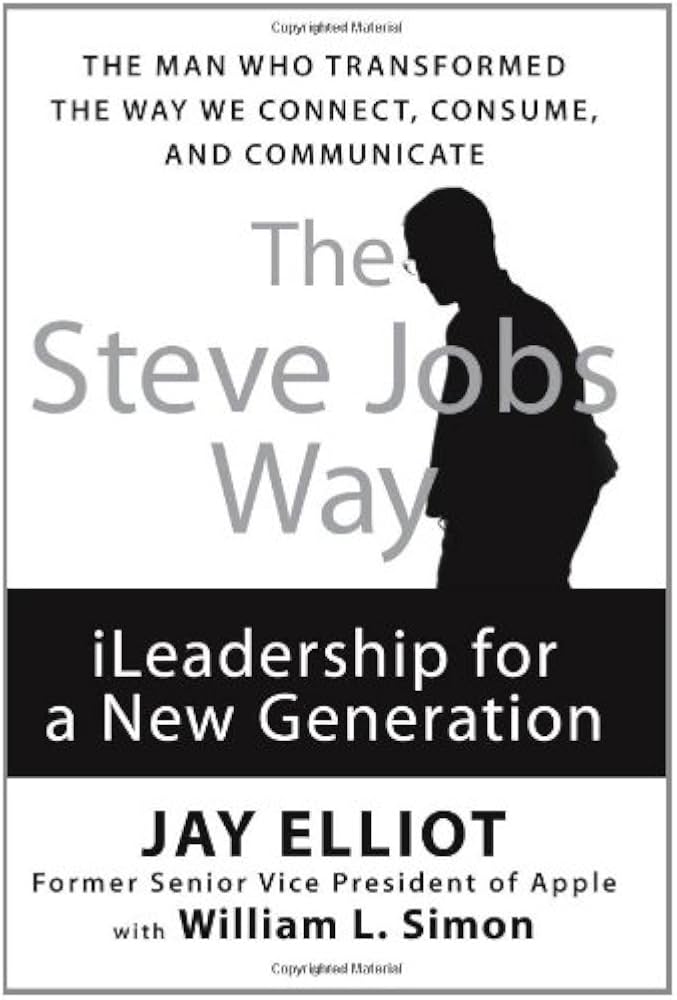
By Jay Elliot · Former Senior Vice President, Apple
The Steve Jobs WayiLeadership for a New Generation
Ten principles for building products people love, from the man who watched Steve build them.
Vanguard Press, 2011 · with William L. Simon
By Jay Elliot · Former Senior Vice President, Apple
Ten principles for building products people love, from the man who watched Steve build them.
Vanguard Press, 2011 · with William L. Simon
Stories in this book
What this book will teach you
More about the book
Most books about Steve Jobs are archaeology — assembled afterward from interviews with people who were in the building. This one was written by the man who sat next to him.
Jay Elliot was Senior Vice President at Apple through the Macintosh years, in the room for the product reviews, the arguments, the demos, and the decisions that never made it into a memo. The Steve Jobs Way is what he took from it: not a biography, but a working method.
The book moves through what Steve actually optimised for — seeing what nobody else could see, starting from the user rather than the technology, cutting until only the essential survived, owning every inch of the experience, and keeping people near him who would tell him the truth. Each principle is illustrated with something that happened, usually to Jay.
It is a book for the people who have to build the thing, not just admire the person who did.
Praise
“An insider’s account of how Steve led, and what made the way he led different.”
Howard Behar, former President, Starbucks Coffee CompanyWho it’s for
Contents
Free companion worksheet
Four questions from the book, with ruled lines under every one. Fifteen minutes and a pen, and you’ll know whether you have a marketing problem or a product problem.
Get the book
Vanguard Press, 2011 · with William L. Simon
About the author

Jay Elliot was Senior Vice President of Apple Computer, responsible for all corporate operations and part of the Macintosh organization from development to introduction. During his tenure, Apple’s sales grew from $150 million to more than $3 billion.
For six years he was beside Steve Jobs five to fifteen hours a day, nearly every day. His second book is titled Leading Apple With Steve Jobs — with. Not under, not for. Steve had the vision and the intolerance for anything half-finished; Jay was the one who could walk into a room of engineers who had just been told to do the impossible and get them to do it anyway.
Before Apple he was at Intel as director of California operations, reporting to Andy Grove and Gordon Moore, and before that at IBM, where he designed the BART ticket machines — which he writes became the prototype for the ATMs now standing in every bank in the country.
He is still building. More about Jay →